

Gynaecology · Menstrual Health · Shela, Ahmedabad
Your Period Is Telling
You Something Important.
Irregular cycles, painful cramps, heavy bleeding — these are not things to just push through. Expert menstrual care helps you understand your body and feel in control every month.
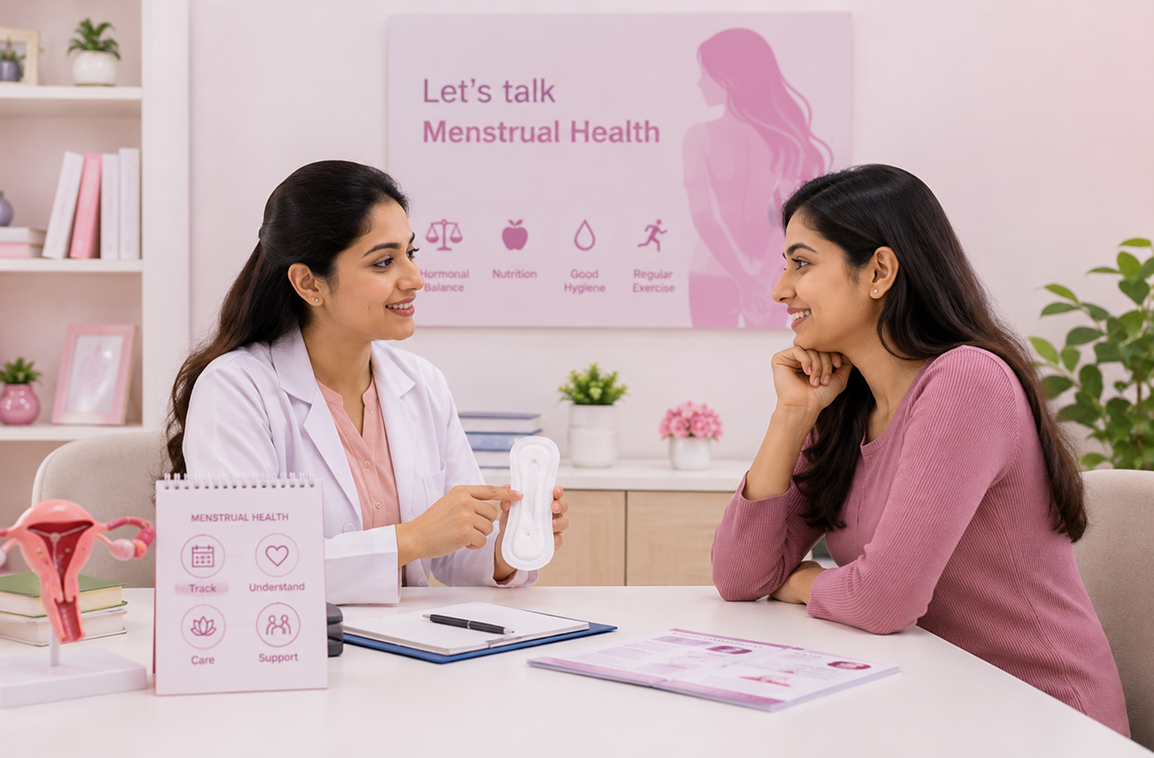

Your Cycle Is More Than Just a Period
Every month, your body goes through a remarkable hormonal sequence. When this cycle is regular and relatively comfortable, it is a strong sign that your reproductive and hormonal health is in balance. When it isn’t — that is your body asking for attention, not something to silently endure.
At Womanhood Clinic, we help you understand what your cycle is telling you — and what to do about it.
21 – 35
Days is the normal range for a menstrual cycle. Anything outside this consistently is worth discussing.
3 – 7
Days is a typical period duration. Longer or heavier than this may indicate an underlying concern.
The 4 phases of your cycle — explained simply
Symptoms That Deserve More Than “It’s Normal”
Far too many women are told their painful or irregular periods are “just how it is.” They are not. Here are the signs your body is asking for proper care:
Irregular or Missed Periods
Cycles that arrive unpredictably, or go missing for months, often signal hormonal imbalance, thyroid issues, or PCOS — all of which respond well to early treatment. Common in PCOS · Thyroid disorders · Stress
Heavy or Prolonged Bleeding
Soaking through a pad or tampon every hour, or bleeding for more than 7 days, is not something to push through. It can lead to anaemia and significantly affect your daily life. May indicate fibroids · Endometriosis · Hormonal imbalance
Severe Cramps (Dysmenorrhoea)
Some discomfort is expected — but cramps that stop you from going to work or school, or that don’t respond to standard pain relief, need investigation. Common with endometriosis · Adenomyosis · Fibroids
Severe PMS or Mood Changes
Irritability, anxiety, or low mood before your period that disrupts relationships or work is called PMDD — a real, treatable hormonal condition, not a personality flaw. Hormonal · Nutritional · Treatable
Unusual Discharge or Odour
Changes in vaginal discharge — colour, smell, or consistency outside your normal — can indicate infection or hormonal shifts that need prompt attention.Infection · Hormonal change · Hygiene-related
Simple Habits That Protect Your Health Every Month
Good menstrual hygiene is not complicated — but many women were never properly taught. These habits make a real difference to your comfort, confidence, and long-term reproductive health.
“Understand your body. Address the cause. Support long-term health.”
Frequently Asked Questions
Mild cramping is normal. Pain that stops you from functioning — working, studying, or going about your day — is not. That distinction matters enormously.
Severe period pain (called dysmenorrhoea) is one of the most under-investigated symptoms in women’s health. It can be a sign of endometriosis, adenomyosis, or fibroids — conditions that are very treatable when caught early, but can affect fertility if ignored for years. You do not need to keep taking painkillers every month and hoping for the best. Please come in and let us find the reason.
Significant variation in cycle length is worth investigating — especially if it has been going on for more than 3 months or is getting worse over time.
Irregular cycles are one of the most common signs of PCOS, thyroid imbalance, or hormonal disruption. Stress, dramatic weight changes, and over-exercise can also cause irregularity. The good news: most causes are very manageable once identified. A simple hormonal blood panel and ultrasound can give us a clear picture within one visit.
A useful rule: if you are soaking through a pad or tampon every hour for several consecutive hours, passing large clots, or your period lasts longer than 7 days — that is heavy bleeding that needs attention.
Heavy periods (menorrhagia) are exhausting — physically and emotionally. They can lead to iron-deficiency anaemia, causing fatigue, breathlessness, and brain fog. Many women are told “that’s just how you are.” That is not an acceptable answer. Fibroids, polyps, adenomyosis, and clotting disorders are all treatable causes. You deserve to not dread your period every month.
If your mood changes are predictable (always in the week before your period) and significant enough to affect your relationships or daily functioning, this may be PMDD — Premenstrual Dysphoric Disorder — a real hormonal condition, not “being emotional.”
PMDD affects roughly 3–8% of women of reproductive age and is linked to sensitivity to progesterone fluctuations in the luteal phase. It is not a character flaw and it is not something to push through silently. There are effective treatments — including targeted nutritional support, lifestyle strategies, and in some cases, medication. You are not overreacting. Please tell us what you experience.
Absolutely yes — to both. These are common myths that persist in Indian households, but there is no medical basis for either restriction.
Bathing with warm water during your period is not only safe — it is hygienically important. Exercise actually helps reduce cramps by improving blood circulation and releasing endorphins. Light to moderate movement (walking, yoga, swimming) is beneficial. If you are in too much pain to move, that is a symptom that needs evaluation — not a sign to rest and repeat next month.
Yes — and this is one of the most important reasons not to ignore persistent menstrual symptoms, even if you are not currently planning a pregnancy.
Conditions like PCOS, endometriosis, and untreated hormonal imbalances can affect ovulation and fertility over time. Addressing them early — even years before you plan to conceive — gives you the best possible reproductive outcomes. Think of managing your menstrual health now as an investment in your future. We are always happy to discuss what your current symptoms mean for your long-term reproductive health.
Because Every Woman Deserves the Best Care Dedicated to Care, Committed to You
Copyright © 2026 Woomanhood Clinic. Powered By Ivotiontech Private Limited