

Gynecology
Menopause Care That
Truly Understands You
Hormonal changes can feel confusing and isolating. You deserve a doctor who listens, explains, and walks this journey with you — at every stage.
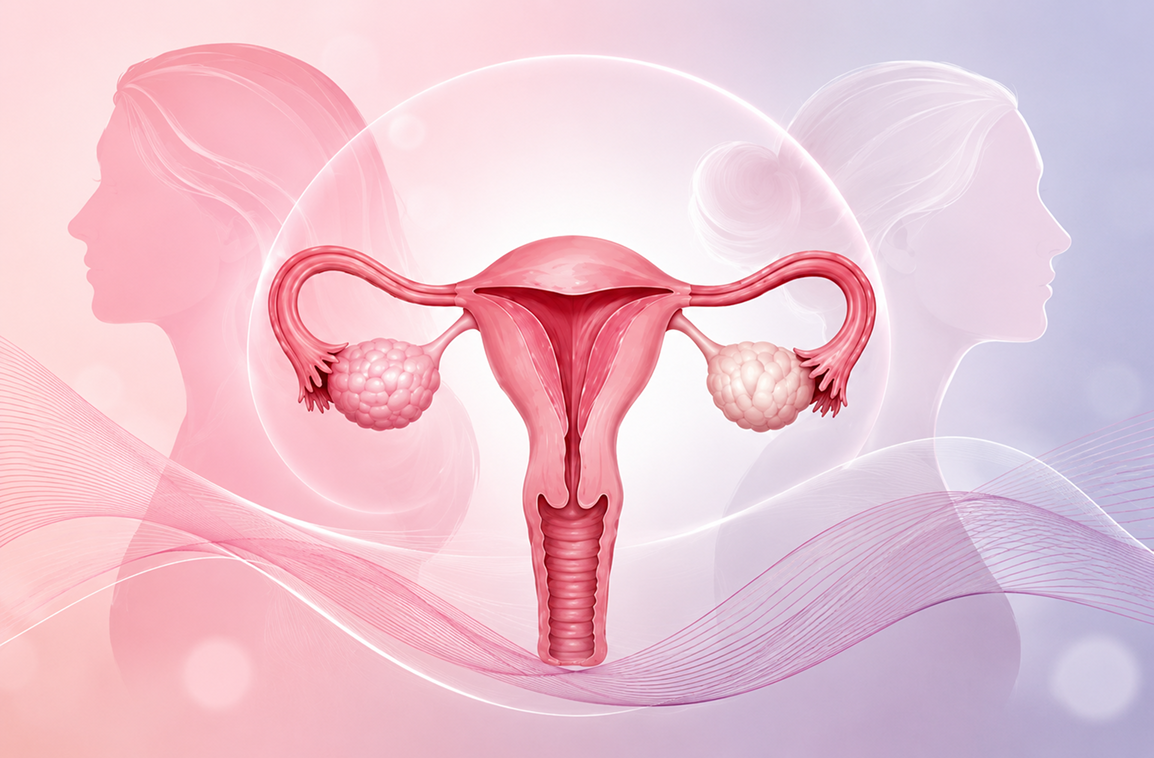

Is This Menopause? Let’s Make Sense of It Together.
You’re not imagining it. Irregular periods, sudden waves of heat, restless nights, mood shifts that seem to come from nowhere — your body is not betraying you. It is simply changing. And change, when understood, becomes so much easier to navigate.
Menopause usually arrives between the ages of 45 and 55. Before that, a phase called perimenopause can last several years — this is when hormones like oestrogen and progesterone begin to gradually decline, and your body starts finding its new balance.
45 – 55
The most common age range for menopause in Indian women — but every woman’s timeline is her own.
Perimenopause
The transition phase before menopause. Periods become irregular, symptoms begin — this can start in your early 40s and last up to 10 years.
Menopause
Confirmed when you have had no period for 12 consecutive months. Your reproductive cycle has completed — a milestone, not a loss.
What Your Body May Be Telling You
No two women experience menopause the same way. Some sail through it; others find it disrupts daily life significantly. Both are valid. Here is what to watch for:
Care That Starts With Listening
At Womanhood Clinic in Shela, Ahmedabad, we do not believe in a single protocol for every woman. Menopause is deeply personal — your symptoms, your history, your priorities. Our job is to understand yours.
“Menopause is not the end of your health journey — it is a new chapter. One that, with the right care, can be your healthiest and most confident yet.”
Frequently Asked Questions
Yes, it can — and it’s more common than most women realise. Menopause before 45 is called early menopause, and before 40 it’s called premature menopause.
If your periods have become unpredictable, you’re experiencing hot flashes, or your sleep has suddenly changed — these are worth discussing with a doctor, regardless of your age. Early menopause is not a failure of your body. It is a hormonal shift that, once identified, can be managed very effectively. Please don’t dismiss your symptoms as stress or age. Come in and let’s find out together.
Irregular periods can have many causes — stress, thyroid problems, PCOS, or perimenopause. A simple blood test can help tell them apart.
We look at hormone levels (FSH, LH, and oestrogen) along with your symptoms and cycle history to understand what’s happening. You don’t need to self-diagnose by comparing notes with friends or reading scary things online at midnight. A 20-minute consultation and a few tests can give you real clarity.
Not every woman needs HRT — and for those who do benefit from it, modern HRT is far safer than the older version many women remember hearing about.
The decision depends on your symptoms, your medical history, and your personal preferences. For some women, lifestyle changes are enough. For others, HRT can be genuinely life-changing — improving sleep, mood, bone health, and overall quality of life. We will never pressure you in either direction. We will explain your options clearly and let you decide what feels right for you.
This is one of the most important questions a woman can ask — and most aren’t told the answer early enough. Yes, declining oestrogen does affect bone density, heart health, and cognitive function over time.
But the good news: these are preventable and manageable with the right attention. Bone density scans, cholesterol checks, appropriate calcium and vitamin D levels, and heart-healthy lifestyle adjustments all make a significant difference. Menopause is an ideal time to invest in your long-term health — not to panic about it, but to plan for it.
Absolutely — and this is the symptom most women are surprised to learn is hormonal. Oestrogen has a direct effect on serotonin and dopamine, the brain’s mood-regulating chemicals.
As levels drop, many women experience anxiety, irritability, low confidence, or a general flatness that feels unfamiliar. This is not “just stress” and it is not “all in your head.” It has a biological explanation — and it has solutions. Please talk to us about your mood changes. Mental and emotional wellbeing is a central part of our menopause care, not an afterthought.
Yes — until you have had 12 consecutive months without a period, pregnancy is still possible. This surprises many women.
Fertility does decline significantly during perimenopause, but ovulation can still occur — sometimes unpredictably. If you are not planning a pregnancy, continue with contraception until menopause is fully confirmed. If you are hoping to conceive, this window matters and we can guide you on your options. Either way, it is a conversation worth having.
Because Every Woman Deserves the Best Care Dedicated to Care, Committed to You
Copyright © 2026 Woomanhood Clinic. Powered By Ivotiontech Private Limited