

Gynaecology · Shela, Ahmedabad
Gynaecology Care for
Every Stage of Your Life.
From your first period to menopause and everything in between — comprehensive, honest gynaecological care that grows with you, in Shela, Ahmedabad.
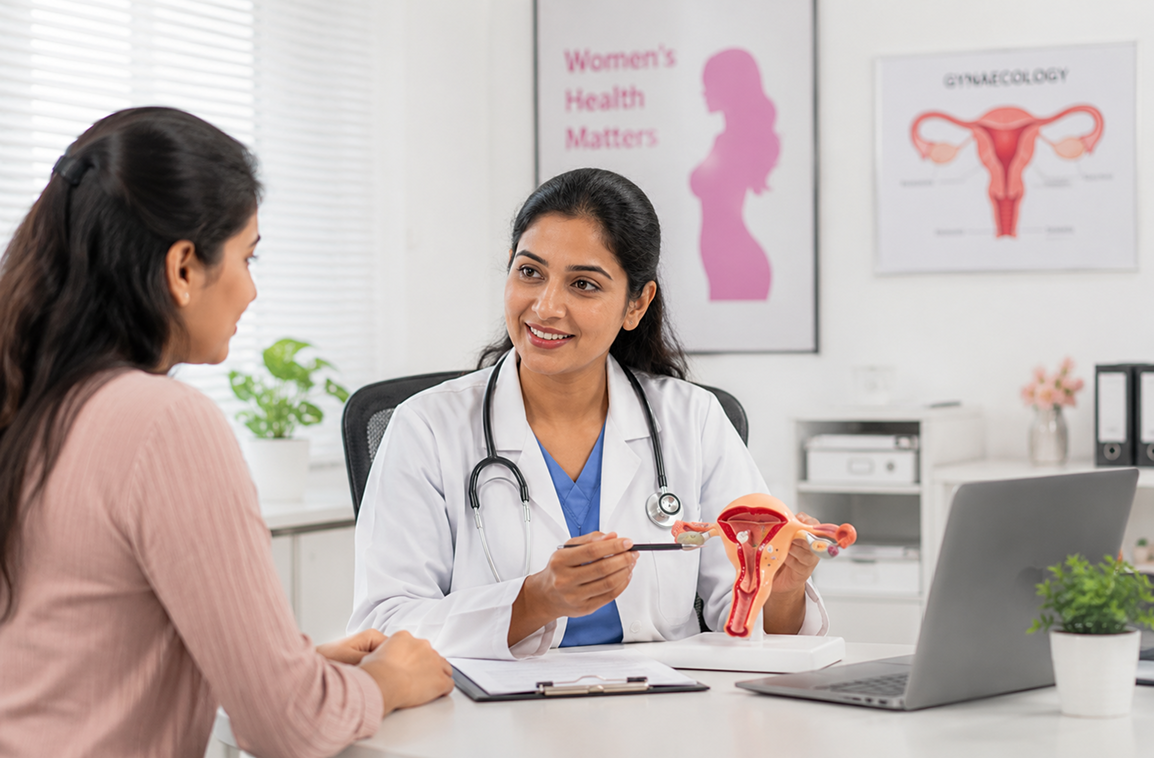

Your Body Changes. So Should Your Care.
Women’s health needs are never static — they evolve from adolescence through the reproductive years and beyond. At Womanhood Clinic, Shela, Ahmedabad, we provide care that meets you exactly where you are.
Your Body Sends Signals — Here’s When to Listen
Many women delay consultation, assuming their symptoms are “normal” or will pass on their own. Often, they don’t — and early attention prevents complications later. Consider a visit if you notice:
- Irregular, delayed, or missed periods
- Heavy bleeding or severe menstrual pain
- Unusual discharge or recurring infections
- Pelvic pain or persistent discomfort
- Hormonal imbalances or PCOS symptoms
- Concerns related to fertility or conception
Comprehensive Care, All Under One Roof
As a trusted gynaecology centre in Ahmedabad, we bring together a full range of services — so you don’t have to juggle multiple clinics for connected concerns.
Care That’s Clear, Respectful, and Personal
Every woman’s health journey is different. We take time to listen, evaluate thoroughly, and build a plan that fits your life — not a generic protocol.
01
Understand the root cause, not just the symptom
02
Explain clearly, so you always know why it happened
03
Guide toward the most appropriate option
Frequently Asked Questions
There’s no fixed “right age” — but most doctors recommend a first visit between ages 13–15, or whenever a young woman has questions about her body, periods, or development.
Early visits are usually simple conversations — about what to expect, how to track cycles, and general health education. They are not always physical examinations unless medically necessary. Building this habit early helps remove the fear and awkwardness that often surrounds gynaecological care later in life. If you’re an adult who has never seen a gynaecologist, there is no “too late” either — your first visit can happen at any age, on your terms.
Most consultations do not require an internal examination at all. When one is needed, it is brief and should not be painful — only mildly uncomfortable for a few seconds.
We always explain what we’re going to do and why, before doing it — you are never examined without understanding the purpose. If you’re anxious, tell us; we will go at your pace and stop at any point if you’re uncomfortable. Many concerns can also be addressed through conversation, blood tests, and ultrasound alone, without any internal examination.
Yes. Whatever you share — about your sexual health, relationships, periods, or concerns — stays strictly between you and your doctor.
This applies whether you are married or unmarried, a teenager or an adult, accompanied by family or alone. You are welcome to ask for a private conversation without anyone else present, including parents or partners, if that helps you speak freely. Honest, judgement-free conversation is the foundation of good gynaecological care — and that starts with confidentiality you can trust completely.
Once a year is a good general rule for most women — even if you have no specific complaints. Prevention is far easier than treatment.
PAnnual check-ups can include a general pelvic exam, a Pap smear (typically every 3 years from age 21, or as advised), and a conversation about any changes in your cycle, health, or family planning goals. If you have ongoing conditions like PCOS or are trying to conceive, your doctor may recommend more frequent visits. Think of it the way you think of a dental check-up — small, regular attention prevents bigger problems.
Absolutely yes — to both. These are common myths that persist in Indian households, but there is no medical basis for either restriction.
Bathing with warm water during your period is not only safe — it is hygienically important. Exercise actually helps reduce cramps by improving blood circulation and releasing endorphins. Light to moderate movement (walking, yoga, swimming) is beneficial. If you are in too much pain to move, that is a symptom that needs evaluation — not a sign to rest and repeat next month.
Not much — just yourself and a general sense of your cycle history. We’ll guide the rest of the conversation.
It helps to know the approximate date your last period started, how regular your cycles typically are, and a brief list of any symptoms or concerns you’d like to discuss. If you have previous medical reports, test results, or ultrasound scans, bringing those along is useful but not essential for a first visit. Most importantly — come with your questions. No question is too small or too embarrassing to ask.
Because Every Woman Deserves the Best Care Dedicated to Care, Committed to You
Quick Link
Our Services
Patient Resources
Copyright © 2026 Woomanhood Clinic. Powered By Ivotiontech Private Limited